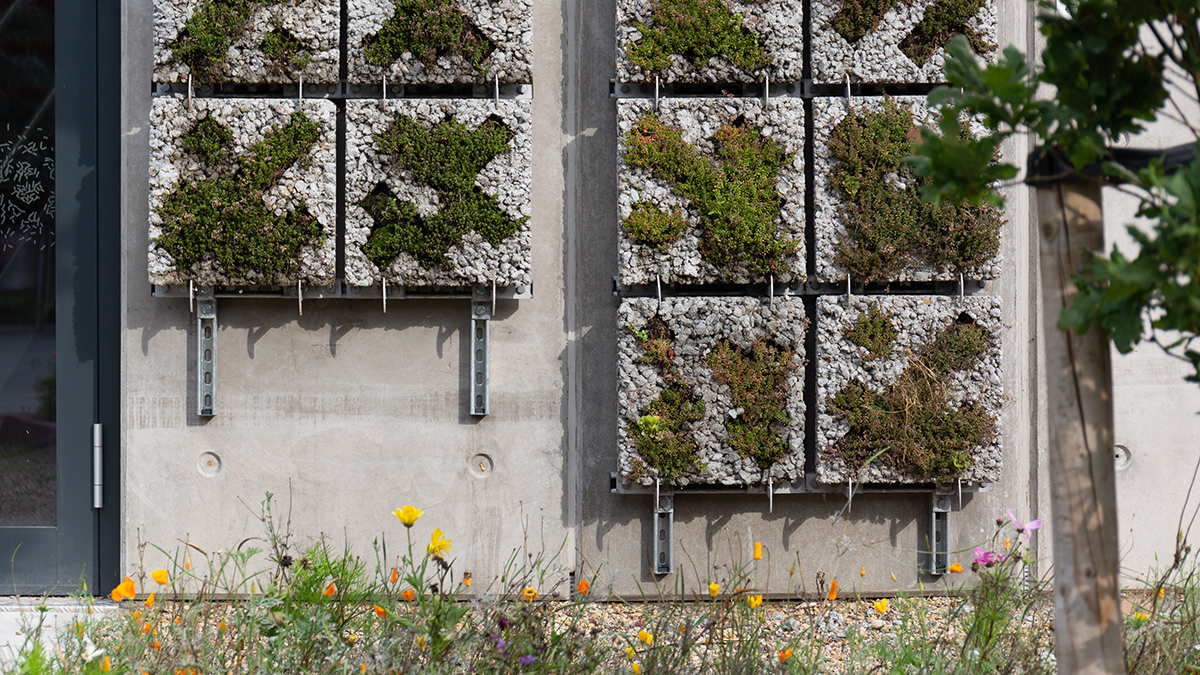
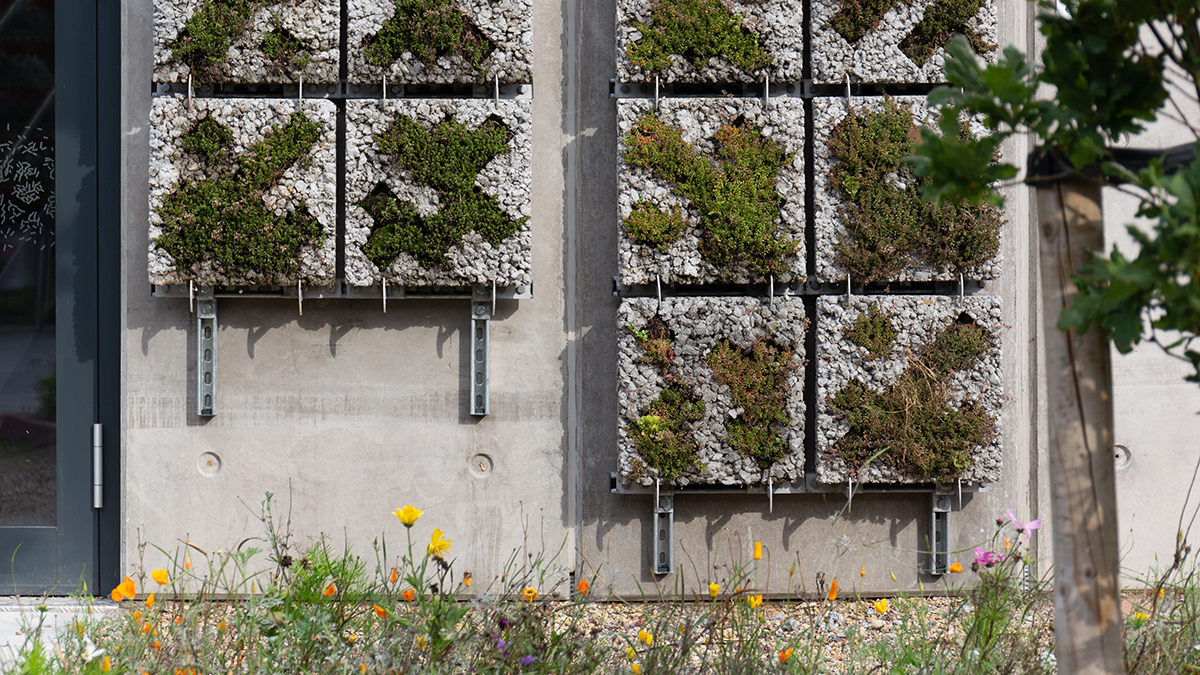
Incorporating engineered living materials (ELMs) into traditional concrete may offer increased sustainability and additional functionalities, such as self-healing properties. These ELM concrete slabs are at the OME, an experimental space at Newcastle University in the United Kingdom. Credit: Ben Bridgens, Hub for Biotechnology in the Built Environment
It’s a Tuesday morning in the year 2036. A maintenance worker arrives at your apartment to take a look at that crack in your kitchen wall. She carries no drywall, sealant, or fillers. Instead, she checks to see whether the friendly bacteria in the wall itself have started healing the fissure. Next, she leans out the window to see whether the moss coating in your living wall is still lush and able to filter out pollutants from the city air. Before leaving, she inspects the fungus-based acoustic paneling on your ceiling. Good news—it still blocks the sound of your neighbor’s loud music.
This is the world of bioengineered living materials.